How to Pick an Honest San Diego Insulation Contractor
How to Pick an Honest San Diego Insulation Contractor
Homeowners across San Diego County often start with an insulation question and end up facing a rodent question. That pattern shows up often in attic rodent proofing in Escondido, where an insulation bid reveals rat droppings on insulation, chewed duct lines, stale attic air, and open entry points along rooflines or eave gaps. In North County, especially around 92025, 92026, and 92029, an honest contractor does not treat insulation as an isolated product. The attic is a system. If Roof Rat (Rattus rattus) activity is active above the ceiling, insulation alone will not fix the problem. Honest assessment matters most when a homeowner is hearing scratching above the bedroom ceiling, finding droppings in the garage, or watching energy bills rise after insulation has already settled and lost R-value.
The title question points to insulation contractors, but in San Diego the real test of honesty often appears before any insulation replacement starts. A truthful company explains whether the attic needs Rodent Exclusion first, whether contaminated fiberglass or cellulose must be removed, whether Attic Air Sealing is needed around recessed lighting cans and plumbing penetrations, and whether HVAC return air pathways are pulling contaminated attic air into the living space. That is why attic rodent proofing in Escondido cannot be separated from the larger question of who should be trusted to work in the attic at all.
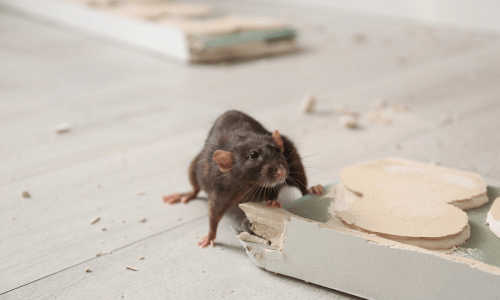
Escondido sits in one of the most active rodent corridors in San Diego County. Canyon edges, fruit trees, palms, ivy, and mild year-round weather all support continuous roof rat breeding. Homes near Daley Ranch, Lake Hodges, Escondido Creek, Harmony Grove, Hidden Meadows, and Jesmond Dene deal with this pressure more often than many owners expect. Along Interstate 15 and Highway 78, the housing stock ranges from older ranch homes with multiple penetration points to newer construction with attic duct systems that still leave vulnerable gaps at roof vents, soffit vents, and garage line transitions. For that reason, attic rodent proofing in Escondido is one of the clearest ways to separate honest contractors from sales-driven operators.
Why honesty matters more in attic work than in most home services
Attic work is easy to hide behind. Most homeowners do not spend time in the attic. They cannot easily verify whether contamination was fully removed, whether entry points were actually sealed, or whether new insulation depth matches the quoted R-value. A dishonest company can overstate contamination, understate structural access points, or sell insulation over active rodent residue. An honest company documents the conditions with photos, identifies what belongs in the scope and what does not, and explains the difference between rodent control and rodent proofing.
That difference is critical in San Diego County. Pest control companies often trap or bait rodents. That may reduce activity for a period. It does not perform Entry Point Sealing. If roof rats are still getting through roofline gaps, eave gaps, plumbing penetrations, or electrical conduit penetrations, the attic remains vulnerable. Honest attic rodent proofing in Escondido focuses on exclusion engineering. That means finding how rodents entered, sealing those routes with chew-resistant materials, and then evaluating whether insulation and sanitation work should follow.
Many expensive attic projects begin with one dishonest shortcut. The contractor starts at the symptom instead of the source. New blown-in material may look clean for a few weeks, but if rats are still entering through Spanish tile roof architecture, open vent screens, or poorly sealed utility lines, the contamination cycle returns. In a warm inland attic, that cycle can restart fast. Summer attic temperatures in Escondido, Rancho Bernardo, Poway, Scripps Ranch, and El Cajon often push past 130 degrees. Those conditions speed up the breakdown of rodent urine residue and dust, and they can move odor and fine particulate into HVAC pathways.
San Diego has a rodent pattern that honest contractors acknowledge
One locally specific fact changes the whole conversation. In San Diego County, most attic rodent jobs are roof rat jobs, not Norway rat or house mouse jobs. The Mediterranean climate, citrus and avocado trees, palm trees, bougainvillea, ivy, and tile-roof architecture create one of the strongest roof rat environments on the West Coast. An honest contractor says that clearly. A vague explanation about “general pests” often signals limited field knowledge.
Roof rats behave differently from Norway rats. Roof rats climb. They travel fence lines, trees, roof edges, utility lines, and stucco transitions. They favor high entry points. That is why attic rodent proofing in Escondido often centers on roofline intersections, gable vents, eave returns, attic louvers, broken mortar lines near tile transitions, and gaps around solar or utility penetrations. A company that talks only about foundation baiting may be missing the actual pattern in North County homes.
Honest contractors also recognize microclimate differences. Coastal homes in La Jolla, Encinitas, Carlsbad, Del Mar, and Oceanside deal with Marine Layer Humidity and elevated mold risk on roof decking and attic sheathing. Urban core homes in Mission Hills, Hillcrest, North Park, and Kensington often contain old cellulose or Vermiculite (Pre-1990 Asbestos Concern). Inland homes in Escondido, Mira Mesa, Carmel Mountain, and Rancho Bernardo face heat stress in the attic that degrades insulation and magnifies odor. The right company explains which of those pressures applies to the property instead of giving the same sales script in every zip code.
What an honest inspection looks like
An honest attic inspection is specific. It is photo-documented. It separates current rodent access from older staining or historical damage. It identifies whether the insulation is simply settled, actively contaminated, moisture-damaged, or compacted beyond useful thermal performance. It checks the attic hatch, top plates, chase openings, recessed lighting penetrations, duct boots, plumbing stacks, and roof vent conditions. It does not jump straight to a full restoration unless the attic actually warrants it.
In attic rodent proofing in Escondido, a truthful inspection also accounts for the structure type. A split-level home near Old Escondido may have multiple roof elevations and concealed returns at fascia lines. A canyon-edge property in Hidden Meadows may have repeated pressure from roof rats traveling from trees to the roof deck. A tract home off Rancho Bernardo Road or near the Highway 78 corridor may have builder-grade vent screening that fails after years of heat exposure. Honest diagnosis changes with the home. It does not come from a one-price script.
Documentation matters because attic work often becomes a bundled sale. A contractor may recommend Rodent Proofing, Insulation Removal, Attic Sanitization, and Insulation Replacement together. Sometimes that is the right scope. Sometimes it is inflated. The honest version shows why each part is necessary. If the insulation is badly urine-soaked, the report should show urine-soaked insulation, nesting areas, and Rat Droppings on Insulation. If the exclusion scope is large, the report should show roofline gaps, soffit vent failures, or conduit penetrations. If the company cannot show those conditions, the bid deserves caution.
Materials reveal whether a company knows exclusion work or just sells the idea of it
Rodent proofing is material-sensitive work. Honest contractors state exactly what will be used and where. Quarter-Inch Galvanized Hardware Cloth is the common chew-proof gauge standard for larger openings and vent reinforcement. Steel Wool Packing may be used at small penetrations, often with Weather-Resistant Sealant to lock the repair in place. Expanding Foam Sealant alone is not true rodent exclusion. Rats can chew through exposed foam. Foam may have a role at certain non-load-bearing gaps, but it should not be presented as the main barrier.
That is one of the easiest honesty checks in attic rodent proofing in Escondido. If the bid relies heavily on foam language and does not mention galvanized mesh, vent screen reinforcement, or durable sealant, the scope may be weak. A roof rat can exploit a surprisingly small opening. A contractor that understands local rodent pressure will specify eave gap sealing, roof vent screen reinforcement, plumbing penetration sealing, electrical conduit penetration sealing, and garage door seal installation where needed.
The best inspection language usually sounds less dramatic and more technical. It mentions soffit vents, gable vents, tile edge gaps, roof decking transitions, and attic hatch conditions. It explains that the purpose is to interrupt access routes rather than just react to droppings. Honest companies are usually comfortable discussing the limits of each repair material because they install them every day and know where failures occur.
Insulation recommendations are where homeowners often get misled
The article title points here for a reason. Insulation is where many homeowners feel least certain. A low bid may hide poor depth coverage. A high bid may include work that is not yet necessary. In San Diego County, an honest insulation contractor starts by deciding whether the insulation should stay, be topped off, or be fully removed. If active contamination is present, topping off over contaminated material is a red flag. If the insulation is only settled and clean, full removal may not be justified.
Attic rodent proofing in Escondido often intersects with insulation decisions because rodents tunnel through fiberglass and cellulose, flattening it and reducing thermal resistance. Once insulation has absorbed urine, the issue is no longer just heat loss. It becomes sanitation and air quality. In those cases, Industrial HEPA-Filtered Vacuum extraction and Sealed Disposal Bags are part of a proper removal scope. A company that skips over removal protocols and moves directly to “new insulation” may be treating a contamination problem like a simple energy-upgrade job.
When replacement is justified, honest contractors specify the material and target R-value. In San Diego attics, R-38 California Title 24 Standard is a common baseline for many applications, with R-49 High-Efficiency Insulation often recommended for stronger thermal performance in hot inland zones. Material choice should fit the home and the attic history. TAP Insulation, a borate-treated blown-in cellulose, is often selected for attics that need pest-resistant characteristics after cleanup. Owens Corning Fiberglass, Knauf Insulation, CertainTeed Insulation, GreenFiber Cellulose, Rockwool Mineral Wool, and Icynene Spray Foam each have place-specific trade-offs in cost, density, sound control, fire resistance, and installation method.
An honest contractor does not pretend that every home needs the premium tier. Nor does an honest contractor use vague language like “premium insulation” without naming the brand or the installed depth. In older homes near Mission Hills or North Park, the conversation may also include vermiculite-era caution. In Escondido, the bigger issue is often whether contamination and Rodent Nesting Sites were actually removed before new material was installed.
Pricing is one of the clearest honesty signals
San Diego homeowners hear wildly different attic numbers because some quotes cover exclusion only, some include cleanup, and some include insulation replacement and air sealing. Honest estimates break that apart. For 2026 San Diego pricing, standalone Rodent Proofing commonly falls in the roughly $600 to $2,500 range depending on entry point count, roof complexity, and access conditions. A home with a few localized eave gaps may land at the lower end. A multi-level home with tile roof vulnerabilities, damaged vent screens, and several utility penetrations can climb much higher.
Once contamination enters the scope, costs move. Standard attic cleanup and sanitization may range from about $400 to $1,200. Cleanup plus insulation removal often lands between $800 and $2,500 depending on volume, contamination severity, and disposal load. Full attic restoration packages that combine cleanup, sanitization, rodent proofing, removal, air sealing, and insulation replacement can reach $3,500 to $7,000 or more when the attic is heavily impacted. Those ranges are not a promise of price. They are a reality check against bids that look strangely low or strangely inflated.
Honest contractors explain what drives those numbers. Entry point count, roof access, attic pitch, contamination spread, old insulation volume, duct interference, and whether a Thermal Fogger or ULV Cold Fogger is needed all affect scope. A weak estimate often uses one large number with no line of reasoning behind it. A strong estimate reads like the attic was actually inspected.
Air quality claims should be specific, not vague
Indoor air quality is often used as a sales pressure point, but the underlying issue is real. Many San Diego homes have an HVAC Return Air Pathway that allows attic air to influence the living space through ceiling penetrations, recessed lighting cans, duct chases, or imperfect return connections. That means attic contamination does not always stay in the attic. If rat waste has broken down in an inland attic during high heat, the system can circulate fine dust, allergen residue, and odor through the home each time the HVAC runs.
That mechanism is especially relevant in attic rodent proofing in Escondido because inland temperature swings intensify the problem. When attic heat builds, volatile odor compounds from urine residue become more active. At the same time, Compromised Insulation R-Value can force the HVAC system to run longer. A truthful contractor can explain that relationship without exaggeration. If the attic is contaminated, cleanup and exclusion may help stale indoor air, dusty vent discharge, worsening asthma symptoms, and Persistent Congestion. If the attic is clean and the issue is elsewhere, an honest contractor says so.
Where contamination is confirmed, a proper scope may include Plastic Sheeting Containment, an Air Scrubber with HEPA Filtration, Industrial HEPA-Filtered Vacuum work, and sanitization using a Hospital-Grade EPA-Approved Disinfectant. In severe cases, thermal fogging or ULV cold fogging may be used after gross waste removal. Those methods have a role, but they are not substitutes for physical cleanup. Fogging over droppings is not decontamination.
Signs that a contractor is selling fear instead of doing honest attic work
Homeowners often notice the same warning patterns. Fear-based attic sales depend on urgency without proof, large restoration numbers without photos, and claims that every attic must be stripped to bare framing. The issue is not that major work is never needed. Some attics truly are far gone. The issue is whether the company can show why.
- A full insulation replacement is recommended before entry points are identified or sealed.
- The exclusion scope names “sealing holes” but does not specify quarter-inch galvanized hardware cloth, vent reinforcement, or weather-resistant sealant.
- The inspection produces no documentation photos of droppings, nesting, chewed ducts, or access points.
- The company avoids discussing CSLB licensing, insurance, or who is actually performing the attic work.
- The estimate compresses rodent proofing, sanitization, and insulation into one large number with no reasoning behind the scope.
Those signals matter because attic work is hidden work. Honest contractors know that skepticism is reasonable. They answer it with evidence, not pressure.
What an honest San Diego attic company usually explains clearly
There is a practical rhythm to good attic assessment. First comes access mapping. Then comes contamination evaluation. Then insulation condition. Then air sealing and thermal performance. This sequence matters because attic systems interact. In attic rodent proofing in Escondido, exclusion usually leads the scope. If entry points remain open, any cleanup or new insulation can be wasted.
Honest companies also explain why some repairs carry stronger warranties than others. Entry point work can often be backed with a Lifetime Warranty on Sealed Entry Points because the repair locations are defined and visible in the inspection record. Insulation performance, on the other hand, depends on attic conditions, future roof leaks, later trade damage, and household use patterns. A truthful contractor distinguishes those categories instead of wrapping the entire attic in marketing language.
The same applies to service combinations. Some homes need only Rodent Exclusion. Some need exclusion plus Attic Sanitization. Some need Insulation Removal and full replacement. Some also need Attic Air Sealing at top plates, chase openings, plumbing stacks, HVAC duct penetrations, and the attic hatch. In older urban homes, duct repair or replacement coordination may become part of the job if rodents chewed flex lines. Honest contractors keep those scopes connected to visible evidence.
Escondido is a strong test market for contractor honesty
Escondido reveals contractor quality quickly because the city combines several attic risk factors at once. It has inland heat, varied roof designs, older homes mixed with newer subdivisions, and strong roof rat pressure along greenbelts and canyon edges. A company working from a real North County base understands what shows up in 92029 near the business parks, in 92027 tract neighborhoods, and in 92025 pockets of older housing. It understands why homes near Daley Ranch or Lake Hodges may see repeat activity if tree contact and roof access are ignored. It understands how fast insulation degrades when attic temperatures soar.
That is why attic rodent proofing in Escondido is more than a keyword phrase. It reflects a recurring field condition. A contractor that handles this market well usually has a stronger grasp of San Diego County as a whole, from coastal humidity in La Jolla and Pacific Beach to inland heat in Poway, Carmel Mountain, and Rancho Bernardo. The company should be able to explain what changes between those microclimates and why the attic scope changes with them.
The contractor’s business structure matters too
Homeowners often focus on materials and miss the business side. Yet honesty often shows up there first. A CSLB Licensed Contractor performs under California State License Board rules. That matters because attic projects blend building repair, exclusion work, insulation, and in many cases decontamination. A licensed and insured operation has more accountability than a cash-only handyman crew that appears after a pest problem. In California, that distinction should not be treated as optional.
Field training matters too. An EPA-Trained Technician Team and NATE-Certified Technicians signal that attic work is being done with some understanding of ventilation, contamination control, and HVAC interaction. A bonded and insured operation should also be willing to explain who enters the attic, how debris is contained, and whether photo documentation is standard. These are not cosmetic details. They are basic signs that the contractor expects scrutiny and is prepared for it.
For San Diego County homeowners comparing attic rodent proofing Find more info in Escondido, one of the simplest trust markers is whether the company can inspect, document, and quote before work begins without pushing a same-visit signature. Photo documentation, a written quote before work, and a no-pressure inspection process usually align with companies that expect their findings to hold up under comparison.
Questions that expose honesty without turning the meeting into a fight
The strongest homeowner questions are calm and specific. They ask what was found, where rodents entered, what material will close each opening, whether insulation is contaminated or only settled, and whether the quoted R-value meets current California expectations for the attic assembly. A contractor that knows the work can usually answer these quickly.
- Which entry points are active, and can they be shown in photos?
- What exclusion materials will be used at roof vents, eaves, plumbing lines, and conduit gaps?
- Does the insulation need removal because of contamination, or is it an energy-upgrade recommendation?
- What R-value is being proposed, and which brand will be installed?
- What part of the scope carries a warranty, and what are the limits?
Those questions are especially useful in attic rodent proofing in Escondido because many quotes combine multiple trades into one package. Honest companies usually welcome scope clarity because it separates them from vague bidders.
What a strong local attic company should look like at the end of the process
By the time the estimate is reviewed, the homeowner should understand whether the job is exclusion-only, cleanup plus exclusion, or a full attic restoration. The estimate should reflect the actual home, the actual contamination level, and the actual insulation condition. It should show awareness of San Diego roof rat behavior and local housing patterns. It should state the materials. It should identify the target insulation standard if replacement is included. It should not bury critical details in a lump-sum number.
For properties in Escondido and the wider Interstate 15 corridor, the strongest contractors usually recognize that rodent problems, insulation failure, and air leakage often overlap. They do not sell one layer of the problem while ignoring the rest. They explain whether the attic needs Roof Rat Exclusion, Rodent Dropping Removal, Urine-Soaked Insulation Removal, Attic Sanitization, or only a measured insulation upgrade. That kind of judgment is what makes a company honest in practice, not just in advertising.
AtticGuard operates from 510 Corporate Drive Suite F in Escondido, 92029, with service across the 92101 through 92130 corridor, North County, East County, and South Bay. For homeowners comparing attic rodent proofing in Escondido, the company offers a Free Attic Inspection with documentation photos and a written quote before work begins, same-day estimates across the primary service area, integrated cleanup, rodent proofing, insulation, and air sealing under one roof, CSLB Licensed Contractor status under #1138505, and a Lifetime Warranty on Sealed Entry Points. Homeowners who want a clear second opinion on attic rodent proofing in Escondido can use that inspection process to verify scope, pricing, and whether the attic truly needs exclusion only or a larger restoration package.